Pixel 11 Pro XL: Google Says Twice as Scratch-Resistant, the Picks Say Maybe
Google's 800nm anti-scratch coating is real, thin and proprietary. A teardown finds it softens micro-scratches without stopping level 6 grooves, while the phone underneath stays refreshingly easy to fix.
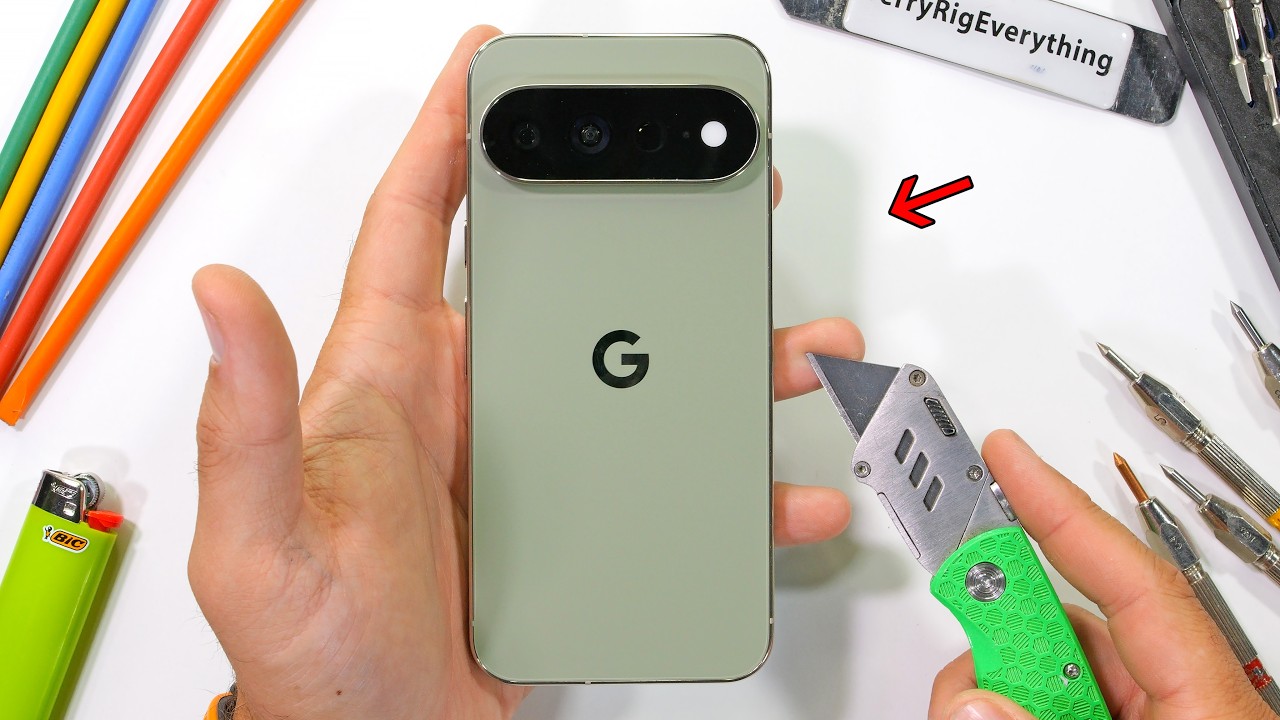
Google put a new layer of glass chemistry on the Pixel 11 Pro XL this year and told everyone about it. The company's launch copy is unambiguous: the Pixel 11 Pro phones "feature our most durable screen ever, with a drop-resistant display that is more than twice as scratch-resistant than previous models."
Zack Nelson of JerryRigEverything took a set of Mohs picks to that claim, and the answer he arrived at was closer to a shrug than a rebuttal.
What the coating actually is
The layer sits above Corning Gorilla Glass Victus 2 and below the oleophobic coating, and a Google spokesperson told 9to5Google it measures 800 nanometres thick — around 1% the thickness of a human hair. Google will not say how it works, describing the formulation only as proprietary and separate from the Victus 2 underneath. It says it validated the coating with tests simulating the contents of a bag: keys, nail files, that sort of thing.
Notably absent from the discussion is ceramic, which Apple and Honor have both leaned on for cover glass, and which Google itself used on the Pixel 11 Pro Fold's outer display. The flat Pro phones got the invisible film instead.
The picks disagree, politely
Nelson's scratch test produced the same result the Pixel line has produced for years: grooves start appearing at level 6 on the Mohs scale and get deeper at level 7. His read was that the marks at level 6 looked slightly less pronounced than usual, so the coating might be helping with micro-scratches, but the deeper level 7 grooves were plainly still there. He filed it under "maybe it kind of helps" and said it does not change his advice to use protection.
Trusted Reviews reached the same conclusion covering the test: the coating makes very fine scratches less noticeable without stopping harder materials from marking the screen. It also noted that the highly polished aluminium frame picked up scratches fairly easily — a predictable cost of a mirror finish.
Where the phone did well was the part Google did not put in a headline. The Pixel 11 Pro XL survived the bend test with barely any flex, and it held up for 20 seconds against a flame. For a 6.8-inch, 7.6mm slab weighing 226.8g, that is a solid structural result.
The back panel is the real regression
Nelson's sharpest complaint was not about the coating at all. The Pro XL's rear panel is satin glass, and he pointed out that Google had a better option sitting in its own 2026 lineup: the glass fibre composite it used on the Pixel 11 Pro Fold, which Google describes as "designed to be nearly impossible to crack." The Fold gets the unbreakable back; the $1,299 flat flagship gets shatterable glass in a colour Nelson compared, at some length, to split pea soup.
Ars Technica's Ryan Whitwam landed on a similar tension from a different direction in his Pixel 11 series review. "The new Pixel 11 series is Google's most refined yet, featuring sleek designs, smart software, and incredible screens," he wrote. "They're also rather boring." His specifics: three generations of the same design language, fractions of a millimetre shaved here and there, prices still inching upward, and a HiLight LED ring on the back that only illuminates when the phone is face down and mostly signals what Gemini is doing.
Open it up and the story improves
The teardown is where the Pixel 11 Pro XL earns its keep. Nelson got the display off with a heat gun and a pry tool in about ten minutes, and the back panel comes away separately, so a screen repair does not require dismantling the rest of the phone. Green T4 screws mark the removal order. The battery is still stubbornly glued in despite pull tabs that Nelson said were not doing much, but it comes out. The charging port board, loudspeaker, haptic motor, front camera and all three rear cameras unplug individually. Under the battery sits a large copper vapour chamber, with the Tensor G6 thermally pasted to bare aluminium on the other side.
Google sells genuine replacement parts through iFixit, and Nelson's verdict was that this is again one of the easiest phones of 2026 to repair — screen or battery inside ten minutes for a competent technician.
So is it the most durable Pixel yet?
Probably, in the narrow sense Google means: the screen resists the small stuff marginally better than last year's, and the chassis does not bend. But "more than twice as scratch-resistant" is a laboratory sentence. Nelson's level 6 and level 7 picks still leave visible marks, even if the finer grooves look less pronounced.
The consolation is that when something does break, this is among the least painful flagships to fix — which, at $1,299, is not nothing.