The Pixel 11 opens easily. The 2033 software promise still needs a battery
Three independent teardowns put Pixel 11 among 2026's easiest flagships to repair. Google's seven-year Android and spare-parts clock is the harder half of that claim.
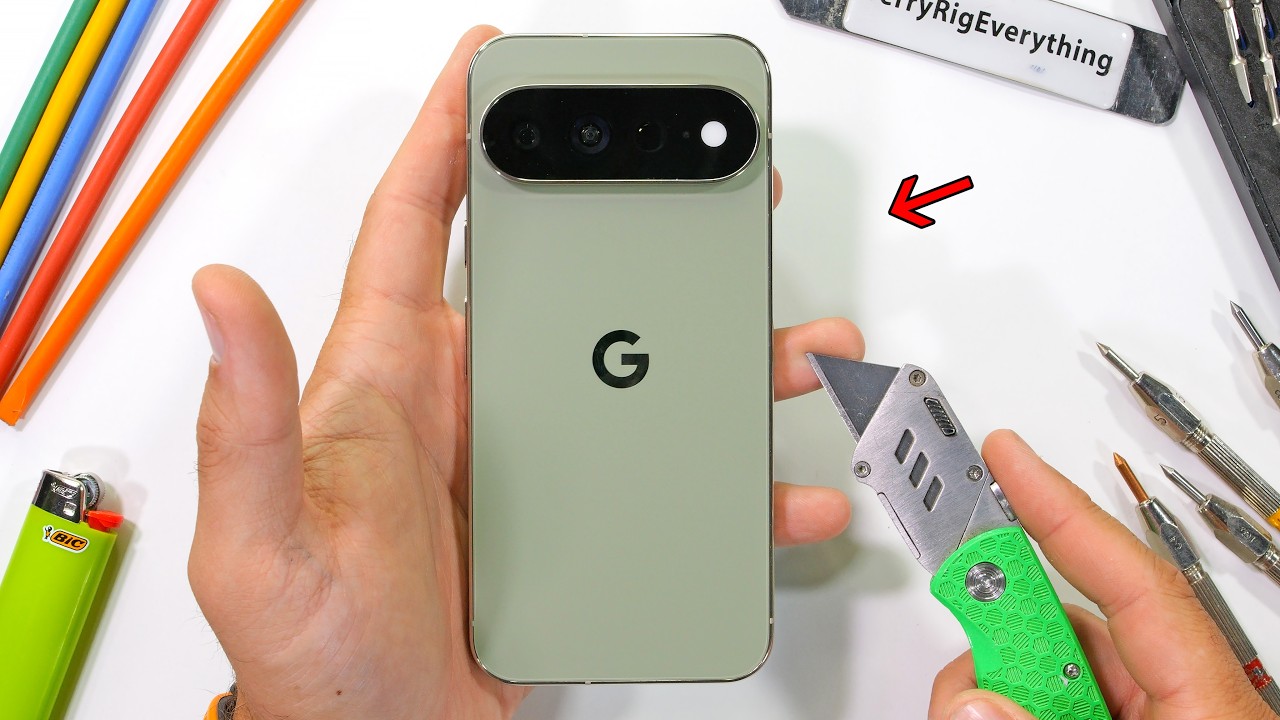
Google painted a handful of Torx screws mint green this year. Not the frame, not the HiLight ring: the fasteners a technician is supposed to undo first. On the Pixel 11 Pro XL, Zack Nelson of JerryRigEverything counted two under the back glass, three over the plate covering the motherboard and four more around the charging board. On the smaller Pixel 11 Pro, Phone Repair Guru spotted the same paint and, after lifting the display without a screwdriver, treated the argument as over. You can fix the phone.
That is the hardware half of a promise Google has been making since the Pixel 8. The software half is a calendar. Pixel 11, 11 Pro, 11 Pro XL and 11 Pro Fold ship with Android 17 and, Google says, seven years of OS, security and Pixel Drop updates. Droid Life’s support table puts the cutoff at August 2033. At the India launch, the company matched that window with seven years of spare parts in every market where the phones are sold. A battery you can lift in week one is only a longevity feature if Google still stocks one in year six.
Front door, back door
Les Numériques called the layout dual-entry, the same trick recent Pixels have used: the screen comes off the front, the battery comes out the back, and neither job requires sacrificing the other. PBKreviews, working on a US Pixel 11, walked through both paths. Heat the back glass, lift it, disconnect the sensor flex, and the 4,985mAh cell sits in an adhesive pull pouch. For a cracked display, skip the back entirely. Heat the front, pry the panel, unplug an extension cable. PBK would not lift a working screen on camera because that step still risks wrecking a good one. The score anyway: 8.5 out of 10.
Nelson timed the XL’s screen at about ten minutes with a heat gun and a pry tool, provided you do not slice the ribbons sitting a half-inch inside the panel. He has broken roughly fifty phones learning that motion and told viewers not to expect a first-attempt success. Once the glass is off, the rest of the XL is tidy: Pixel Snap magnets and the 25W wireless coil live on the back panel, the charging board has a grey rubber ring for IP68, and the cameras unplug as a bonded triple. “Google has once again made one of the easiest phones to repair of 2026,” he said. A technician, in his estimate, can do the screen or the battery in about ten minutes.
The glue Google still has not dropped
None of this is a Fairphone. Heat is still required. Glass still has to be lifted. Phone Repair Guru titled his video as if the Pro were a repairability flop, then spent the teardown complaining about the spec sheet: 20mAh less battery than last year’s Pro, the same 30W wired ceiling, and a HiLight ring he could not see the sense of cramming into one small circle with the camera flash. Nelson was ruder about it, calling it Google significantly over-complicating a flashlight nobody asked for. The opening sequence was complimentary. Screen replacement, he said, is “one of the easiest” on pretty much any Android phone. Google even lets you do it without a screwdriver. The green screws exist so a home repairer knows which ones to touch.
The battery is the stubborn piece. Nelson’s pull tabs on the XL were “still very securely glued into place” and did not help much; he appreciated the sentiment. PBK needed heat or isopropyl alcohol on the base model’s pouch. Guru got the Pro cell out without much drama, then disliked the flex cable and vapor chamber sitting underneath it. Notebookcheck, writing up Nelson’s video, made the same observation: the pack is stuck down hard, and still replaceable. Buttons, at least, pop straight out of the frame, which is more than most flagships manage.
Google’s scratch claim did not survive the usual Mohs picks. Nelson said the 800-nanometre coating above Gorilla Glass Victus 2 might soften the level-six marks, but the deeper grooves at seven are still there. “We’ll have to chalk this up to a maybe it kind of helps scenario.” The XL did not flex in the bend test. Android Authority’s Taylor Kerns translated that as a back-pocket phone that should survive sitting down. The Olive back, Nelson compared to split pea soup.
Parts on a promise, not yet on a shelf
Google sells genuine Pixel parts through iFixit, which Nelson called super helpful. As of 24 August, Android Police’s Timi Cantisano checked the storefront and found Pixel 11 kits had not appeared. The seven-year spare-parts line, confirmed to Android Authority during the India launch, is a policy, not a shopping cart. For people who will not open the phone, Google’s own estimator quotes about $218 for a professional screen and $88 for a battery on the Pro XL, which starts at $1,299. The base Pixel 11 starts at $899.
Android Authority’s Hadlee Simons noted the battery math that makes the parts clock matter. Pixel cells are rated for 1,000 charge cycles before they are down 20 percent, which can arrive around year three of a seven-year software life. GSMArena made the same point about capacity fade. Seven years of OS upgrades from Android 17 is a real commitment. It is also a bet that a shop can still buy a battery, a display and a charging board when the last Pixel Drop lands.
The green screws and the URL printed on the battery, which Les Numériques compared to Framework and Fairphone’s on-device instructions, are the honest engineering. The software date is the contract. If the kits show up on iFixit the way last year’s did, the Pixel 11 is one of the few 2026 flagships whose seven-year software window has a matching hardware path. Until they do, the mint-green screws are a map to a store that is not yet open.