OPPO fixed the foldable crease. The compromises moved elsewhere
Three reviewers agree the Find N6 has the flattest folding display yet. A month of use shows why that does not make OPPO's A$3,299 phone compromise-free.
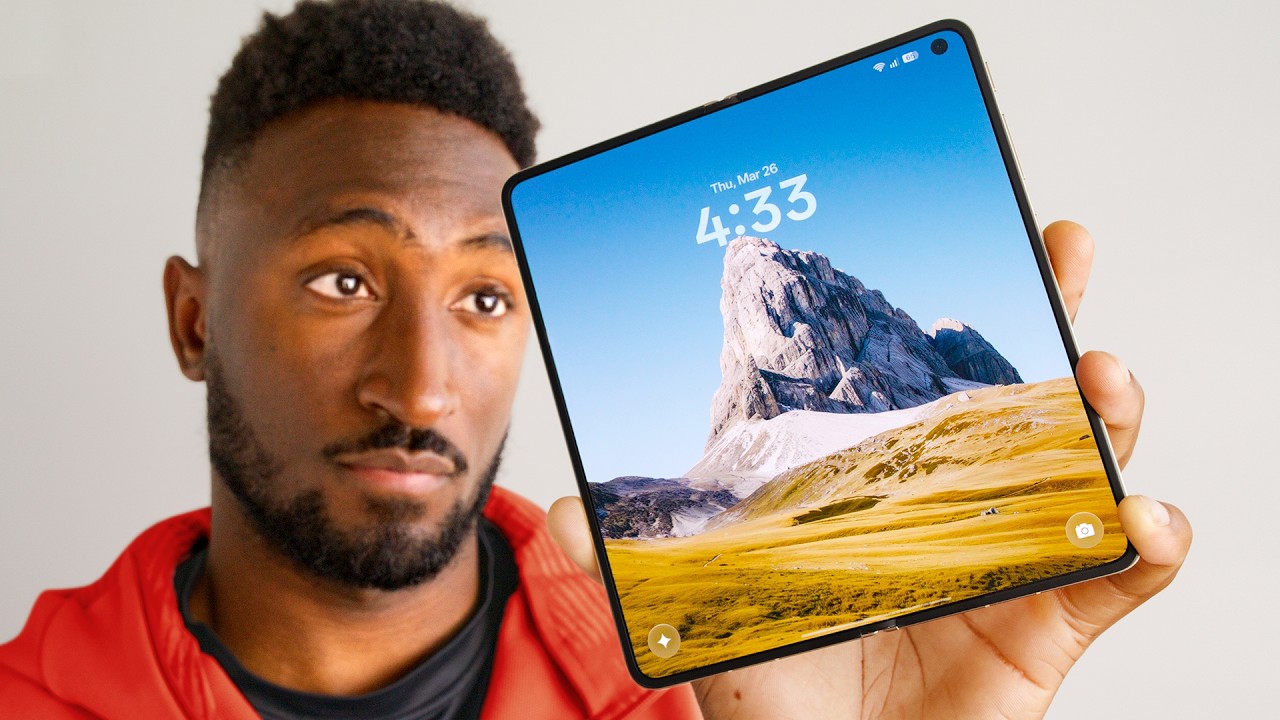
The most convincing feature on OPPO's Find N6 is the one that is barely there. Open the phone and its centre crease almost disappears. Drag a finger across the 8.1-inch display and there is little of the trough that still announces most folding screens.
That achievement has encouraged a bigger claim. OPPO pitches its A$3,299 foldable as a no-compromise flagship, a crease-free tablet and a productivity machine. Three transcript-bearing reviews agree that the display engineering is exceptional. They also reveal where the compromises went: into camera behaviour, software management, regional availability and a separate A$199 pen kit.
A crease that survived the first month
OPPO calls it a Zero-Feel Crease, a carefully chosen name that promises touch rather than literal invisibility. Michael Fisher of MrMobile could still see and feel a crease during his 10-day review, but judged it so slight beside other foldables that it might as well be gone. Marques Brownlee reached much the same verdict after initially treating the marketing with suspicion. In his testing, it was only perceptible when he deliberately searched for it.
The mechanism is unusually elaborate. OPPO laser-scans each titanium hinge, then uses 3D liquid printing to fill tiny surface variations with a polymer that is cured under ultraviolet light. The company says this reduces deviations across the hinge from 0.2mm to 0.05mm. A thicker ultra-thin glass layer is intended to resist the slow deformation that makes creases deepen with use.
A month-long review from Anakin Dad supplies a useful early check. His crease still looked much as it had on day two, and the hinge continued to hold at intermediate angles rather than falling shut. He could still feel the fold under a finger, so the marketing name should not be read as a physical impossibility. What matters is that the improvement did not vanish once the review-unit shine wore off.
OPPO cites TÜV Rheinland testing for one million folds, with the display remaining exceptionally flat after 600,000. Those are laboratory claims, not years of independent ownership data. The month-one report cannot validate them, but it does clear the first, more modest hurdle.
The battery number depends on which screen you use
The Find N6 is less than 9mm thick when closed, weighs about 230g and contains a 6,000mAh silicon-carbon battery. Brownlee compared its dimensions with a conventional large flagship and found that the outer 6.62-inch screen no longer felt like the narrow, secondary display of early book-style foldables. Fisher averaged roughly a day and a half and measured a rise from empty to 37 percent in 15 minutes using its 80W charging.
Then the month-long account complicates the tidy battery story. Anakin Dad used the inner display most of the time and saw about six hours of screen-on use. He regarded that as ordinary rather than impressive for such a large panel. Both experiences can be genuine. A capacity figure does not say how often the owner opens the phone, how bright the 8.1-inch panel runs or how aggressively ColorOS restrains background activity.
That last point produced the review's most practical warning. Despite granting continuous location permission and checking battery settings, Anakin Dad said Life360 refreshed his position only about once an hour. This is one tester's app-specific experience, not proof of a system-wide defect, but it is more consequential than a benchmark. A battery-saving policy that delays a family location app is not free endurance.
The camera is excellent until the scene fights back
The hardware reads like an answer to years of cut-down foldable cameras: a 200-megapixel main sensor, 50-megapixel ultrawide and 50-megapixel 3x telephoto, with Hasselblad colour modes. Fisher preferred its still photos to Samsung's Galaxy Z Fold 7 and found the system fun enough to change how he framed shots. Android Central likewise praised its daylight detail, low-light performance and improved secondary cameras.
None of the reviewers mistook it for a perfect slab-phone replacement. Fisher found the main camera could struggle with bright subjects against dark skies and moving people in dim light, while video showed inconsistent colour and heavy sharpening. The month-long review objected to saturated greens and blues, and found full 200-megapixel captures slow enough to demand a steady hand. The disagreement is instructive: the Find N6 may be among the strongest foldable cameras, but colour preference and subject motion still decide whether that matters.
The best version is sold in surprisingly few places
OPPO officially sells the Find N6 in Australia for A$3,299 through its store, JB Hi-Fi and Vodafone. It also launched in Singapore and other Asia-Pacific markets. It is not officially sold in Europe or North America. Fisher asked an OPPO representative why and received a remarkably plain answer: “I don't know.”
That limited reach makes the phone's strongest features harder to recommend than to admire. Importing can complicate carrier compatibility, warranty service and repairs, precisely the areas where an expensive folding device benefits from local support. Buyers in supported markets get a published commitment of five major OS upgrades and six years of security updates, but should still price the optional pen and case into the productivity pitch.
The Find N6 has not eliminated compromise. It has done something more useful: removed the crease from the top of the list. The screen, hinge and slab-like cover display now feel mature enough that reviews can argue about background app behaviour, colour processing and retail coverage instead. That is progress, even if OPPO's best foldable remains easier to praise than to buy.