Apple promised the biggest battery jump ever. The lab got 33 minutes
Browsing tests put the iPhone 18 Pro Max 3% ahead of last year and the 18 Pro 6% ahead, against Apple's 15% video-playback claim. Reviewers were more impressed by the Face ID camera hidden under the screen.
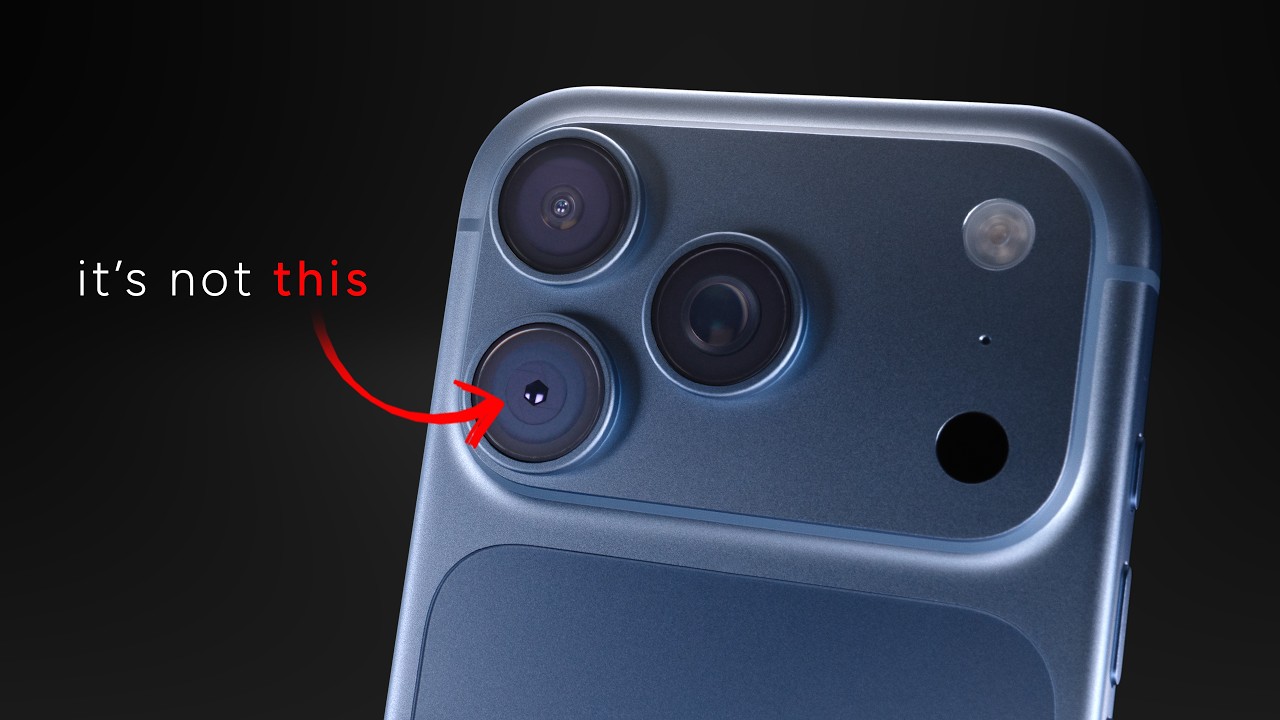
Apple told us the iPhone 18 Pro Max delivers "the largest increase in battery life ever" on an iPhone. The lab results are in, and the phrase survives — barely, and only if you spend your life watching video.
The numbers
TechRadar and Tom's Guide both ran the new Pros through a scripted web-browsing drain test over cellular, and both published the same figures: 16 hours 17 minutes for the iPhone 18 Pro, 18 hours 27 minutes for the Pro Max. (The two titles share an owner in Future, so treat that as one result reported twice, not two independent confirmations.)
Against last year's models, that is 56 minutes more than the iPhone 17 Pro — a 6.1% gain — and 33 minutes more than the 17 Pro Max, or 3.1%. Apple's own comparison page quotes video playback figures: 36 hours for the 18 Pro against 33 for the 17 Pro, and 45 hours for the 18 Pro Max against 39. Those are 9% and 15% improvements.
So the largest gain Apple advertises shows up in the metric where the screen is doing almost nothing and the modem is idle. Push the radio and the browser and the 18 Pro Max — the phone with the headline claim — improves least. Tom's Guide's John Velasco called the result surprising given how heavily Apple leaned on the A20 Pro's efficiency.
Apple's own fine print, quoted by TechRadar's David Nield, hedges accordingly: "All battery claims depend on network configuration and many other factors. Actual results will vary."
The context Apple would rather you skip
Against Android, the Pro Max does fine. It beats the Galaxy S26 Ultra by 1 hour 47 minutes in the same test and the Pixel 11 Pro XL by nearly four hours. The smaller 18 Pro finishes within 23 minutes of the S26 Ultra despite a considerably smaller body, which is a genuinely good result.
Then there is the OnePlus 15, which ran for 25 hours 13 minutes — more than six and a half hours past the biggest iPhone. It does that with a 7,300mAh silicon-carbon cell. Apple's European-market capacities are 4,056mAh and 5,391mAh, in conventional lithium-ion. A 2nm chip bought Apple an hour; a different anode chemistry bought OnePlus a working day.
What reviewers actually got excited about
Dave Lee of Dave2D, whose review is titled "Apple's Hyping The Wrong Thing", spent the opening minutes not on battery or the variable aperture but on the Face ID camera now hidden under the display in the top-left corner. Putting a microscope on the panel, they found a zigzag pattern of missing pixels letting infrared light through, with the surrounding pixels driven harder to hide the gap. Their testing found the sensor performing as well as the 17 Pro's, which they described as the most impressive engineering in the phone — while flagging a worry about how those overdriven pixels age, and noting that only an optically clear screen protector will do.
Lee was similarly measured on the aperture everyone else led with. The default is f/1.8, effectively identical to the 17 Pro's fixed f/1.78, with the same sensor and the same 24mm lens. In good light they struggled to tell the two phones' photos apart, and pointed out that Samsung and Xiaomi both tried variable apertures and abandoned them.
PetaPixel's Jaron Schneider found the optical trade-off worth documenting: "I think Apple's choice not to lock us to the wider aperture was very smart, because sharpness takes a hit when shooting wide open. We noticed that while the center is about as sharp as last year's iPhone 17 Pro when shooting at night, the edges quickly degraded... In order from sharpest to softest, it goes: f/2.8, f/1.8, f/4, and f/1.48."
CNET's Patrick Holland liked the new manual controls and hated reaching them: "I use the lens aperture and shutter speed controls quite a bit, but they are located at the bottom of the camera controls drawer. When shooting one-handed, I have to tap, then expand the drawer to get to the bottom... Also, why can't I assign any of these to the Camera Control button on the side of the phone?"
The verdict most of them reached
Engadget's Cherlynn Low landed where the consensus did: "In the iPhone Duo's shadow, the iPhone 18 Pro certainly feels like an 'S' device. But S-year iPhones were never bad iPhones. They were simply unexciting." The Verge's Allison Johnson called it "excellent and utterly iterative". MacRumors' roundup told anyone on a 17 Pro or a 16 Pro not to bother, and pointed iPhone 14 Pro owners at the upgrade instead.
The genuine improvement almost nobody advertised is thermal. Lee's 3DMark stress runs showed both new Pros holding peak performance better than the 17 Pro pair, which were already strong — the result of improved vapour chambers, a graphite layer, a copper display plate, and the A20 Pro placing memory beside the die rather than stacked on top. That matters less for gaming frame rates than for the phone that refuses to dim your screen on a hot day.
One charging footnote worth knowing before you buy an accessory: the advertised 50% charge in 15 minutes needs a 60W charger that supports fine-grained voltage switching, not just high wattage. A generic laptop brick will not get you there.
If you own a 17 Pro, keep it. If you are carrying a 14 Pro, this is a substantial jump, and the Face ID camera you will never see is the part worth looking for.