iKKO's tiny MindOne Pro aces the sapphire test and fumbles the phone part
The square MindOne Pro has real sapphire and clever packaging. Three independent tests found weak battery life, unfinished software and a fragile camera pivot.
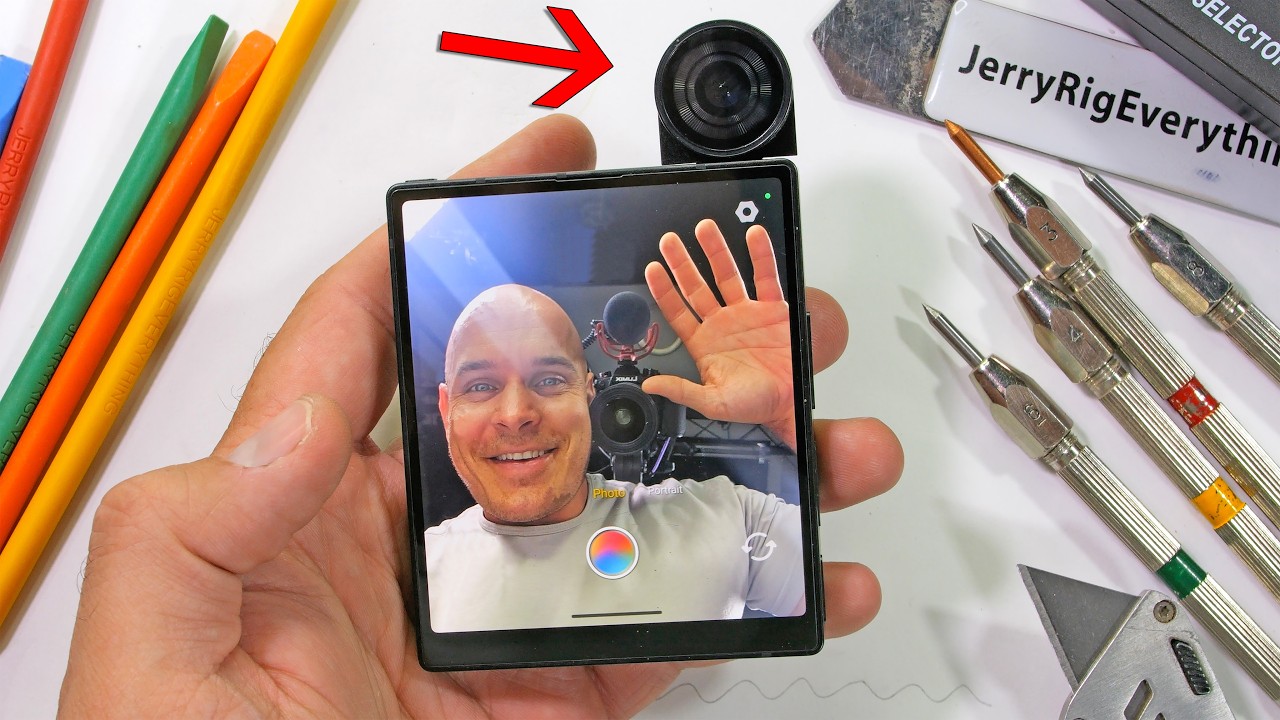
The iKKO MindOne Pro is the rare phone that looks more interesting after its back comes off. Beneath the glass is a tightly packed, eccentric little machine: a four-inch square AMOLED, a single camera that swivels through 180 degrees, and a real sapphire cover that shrugged off the usual scratch picks. Unfortunately, the teardown also exposes the product’s central problem. iKKO spent its best engineering on the parts you notice in a product photo, while the pieces that decide whether a phone is pleasant to own feel unfinished.
That distinction matters now that the crowdfunded handset is reaching buyers. T3 currently lists a UK pre-order at £324. Three independent tests tell a remarkably consistent story. JerryRigEverything tested and dismantled it, MrMobile used the global version as an actual phone, and SSPAI examined a China-market unit. The novelty survives contact with reality. The sales pitch does not.
The sapphire is genuine. The camera pivot is not
The screen is the claim that survives the picks. iKKO describes the display cover as “sapphire glass with 9H hardness,” muddling a pencil-hardness label with the mineral hardness scale. Zack Nelson’s scratch test cut through that marketing fog: the surface resisted marks at levels six and seven and began scratching at level eight. His diamond tester also matched the panel to a Tissot sapphire watch face. The four-inch panel survived direct flame without a visible burn mark. For a small manufacturer, using the expensive material where promised deserves credit.
The aluminium-framed body also resisted Nelson’s bend test. The rotating camera did not. The module tore away when force was applied, leaving its small pivot pins exposed. This was an intentional destruction test, not normal handling, so it does not prove that cameras will fall off in pockets. It does show that the only camera on the phone is also its most vulnerable protruding part. The lens cover is not sapphire, and the handset’s IP54 rating means protection against splashes rather than immersion.
Inside, the compromises become easier to see. JerryRigEverything found a 2,200mAh battery, a single small speaker, no rubber ring on the SIM tray, and a graphite pad handling heat near the main board. The battery is accessible after removing the adhered rear panel, midframe and screws, but this is not a tool-free repair design. T3’s summary of the teardown reached a similar verdict: the premium screen cover protects only one part of a device whose camera and water resistance need more care.
A small phone should make the basics easier
Michael Fisher’s MrMobile review is the useful counterweight to a laboratory torture test. He found the global model capable of running ordinary Android 15 apps through Google Play, and responsive enough with its MediaTek MT8781 processor for daily software. Its shape feels less like a shrunken slab phone and more like an old music player or the cover display of a clamshell foldable liberated from the rest of the handset.
Daily use uncovered less charming details. Fisher reported 4G-only cellular service, battery life that struggled to reach the end of a day, unreliable voice dictation, crashes while setting alarms, a fingerprint reader that vibrated repeatedly when brushed, and Google Wallet payments that did not work on his unit. He also criticised the weak loudspeaker and found camera output noisy, short on dynamic range and fussy about focus. The swivelling 50-megapixel Sony camera is a smart use of scarce space because it serves rear photos, selfies and video calls, but clever packaging cannot substitute for image processing.
SSPAI’s China-unit testing was harsher. Its reviewer found ordinary phone and messaging interfaces poorly adapted to the near-square screen, severe idle drain with a SIM enabled, heat during charging and photos with washed-out colour or a green cast indoors. Some software details differ between regional builds, particularly Google services, but the battery, thermal and camera observations closely match MrMobile’s global-unit experience. That agreement is more informative than any single benchmark.
“Free global internet” needs a large asterisk
The name of iKKO’s AI mode suggests a second operating system. In practice, MrMobile describes it as a restricted launcher for built-in chat, recording, translation and study tools. iKKO includes data access for those AI services in supported regions, but this is not free, general-purpose web access. Normal browsing still needs a physical SIM, Wi-Fi or the company’s separate virtual-SIM data service.
Nelson found the bundled chat slow, unable to return images and could not get the phone to show him virtual-SIM plan pricing. Fisher saw little reason to use the AI suite instead of established Android apps. SSPAI encountered account connection errors and said its China unit’s chatbot would not retrieve current information. Different software versions can improve, but three reviewers finding friction in the feature printed largest on the box is a warning, not a launch-day quirk to wave away.
Buy it as a second phone, not a first
The MindOne Pro makes sense as a collector’s object or a deliberately limited second phone for someone who prizes pocketability and does not depend on mobile payments, strong speakers, long battery life or a polished camera. Its tactile appeal is real, and the sapphire screen is not decorative fiction. Small-phone fans are right to want more hardware like this.
They should also demand better fundamentals. A compact handset does not receive a special exemption from reliable alarms, sensible standby drain and clear mobile-data pricing. iKKO has built a memorable shell and proved that a four-inch Android phone can still feel desirable. The teardown’s most important finding is not that the camera can be snapped off. It is that the sturdy little body contains too many reasons to keep carrying a second, more dependable phone.