Galaxy S26 FE reviews: a USB downgrade and a difficult $700 price
Samsung's $700 Fan Edition gains the Exynos 2500 but loses wired DeX. Reviewers report varied battery and gaming results, with different tests telling different stories.
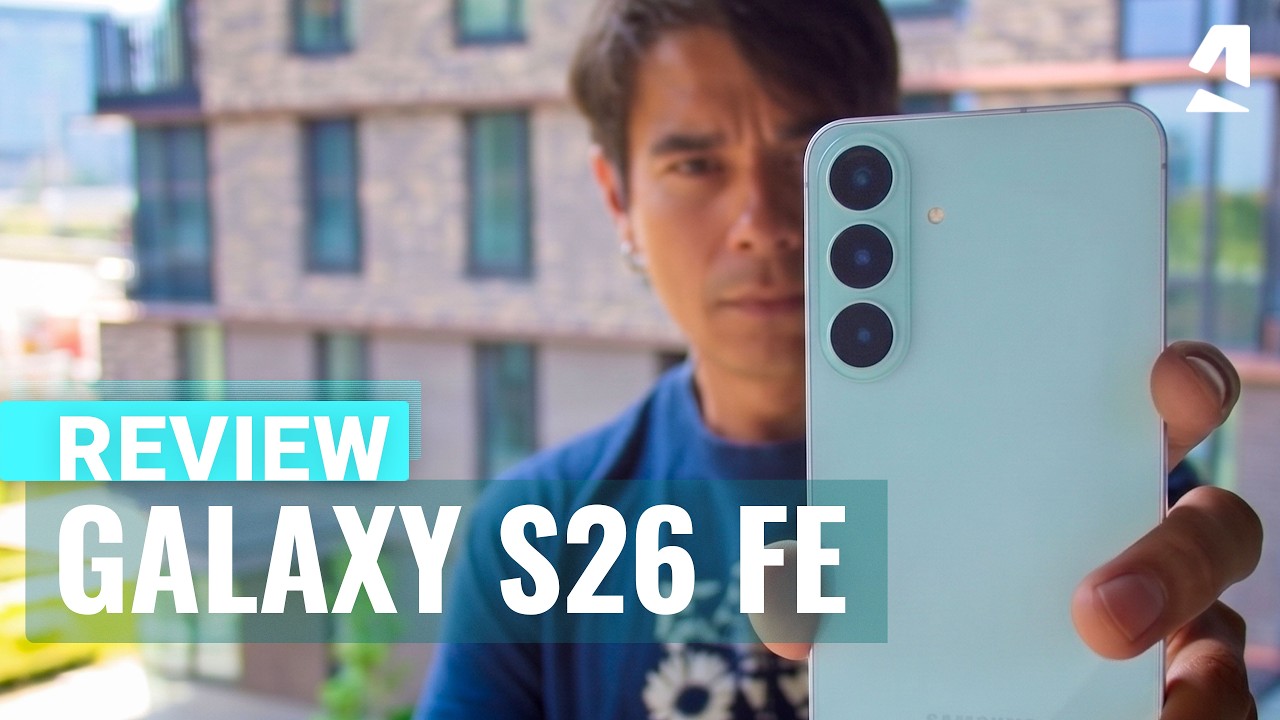
Image: GSMArena video review thumbnail.
The Galaxy S26 FE's new chip comes with a less welcome change: a slower USB port that drops wired DeX. At $700, that is an awkward trade. The reviews also paint different pictures of battery life and gaming performance, but some of the apparent disagreement comes from what each tester measured, and which phone they used as a comparison.
What changed, and what went backwards
The headline upgrade is the chip. The S26 FE swaps last year's Exynos 2400 for the Exynos 2500, the chip GSMArena points out first appeared in the Galaxy Z Flip 7. Nearly everything else is carried over: a 4,900mAh battery, 45W wired and 15W wireless charging with no alignment magnets, a 6.7-inch 120Hz OLED panel, and the same 50MP main, 12MP ultrawide and 8MP 3x telephoto cameras.
Some of the changes are downgrades. WIRED's Simon Hill found that the USB-C port has dropped from USB 3.2 to USB 2.0, which means “file transfers max out at 480 Mbps, and it doesn’t support wired DeX.” The phone also loses DisplayPort output, so Hill could not use it with his Viture Beast display glasses. GSMArena confirmed that video output is gone and also measured quieter speakers than last year. The back has gone from matte to glossy, which Tech Spurt's reviewer said shows fingerprints badly on the two darker colours.
Prices went up too. The 128GB model costs $699.99 and the 256GB model $799.99, up from the S25 FE's $650 starting price. In the UK, the phone starts at £699.
Better than last year can still mean throttling
The comparison matters here. GSMArena's verdict on the new chip was upbeat: “what these peak numbers won't tell you is that the S26 FE has much improved sustained performance compared to the previous model.”
MakeUseOf ran 3DMark's Steel Nomad Light stress test and got a different picture. The phone opened at 2,537 points and fell to 1,328 on its weakest loop, a 52.4% stability rating. The same outlet recorded 77.1% on the Galaxy S26 Ultra and about 72% on the base S26. “The FE loses nearly half its performance under sustained load and becomes noticeably hot in the process,” the review concluded.
These results do not necessarily cancel each other out. GSMArena was comparing against the S25 FE, while MakeUseOf was comparing against the rest of the S26 lineup. The phone can be much better than its predecessor and still well behind its siblings. Gaming tests suggest the second comparison is the one that matters. Hill said Wuthering Waves “dropped frames, glitched, and then crashed.” Tech Spurt's reviewer described the same game as close to unplayable in fights at higher settings, with frame rates falling into single digits. It still crashed on lower settings, even with Samsung's Game Booster in performance mode.
The benchmark numbers are not perfectly consistent either. In Geekbench 7, IT Pro recorded 2,048 single-core and 7,503 multi-core, while MakeUseOf got 2,054 and 6,503. The single-core results nearly match, but the multi-core scores are 1,000 points apart. MakeUseOf also said the Geekbench GPU test failed validation on repeated runs.
Battery: two workdays, or a power bank by dinner
With the same cell as last year, battery life comes down to the new chip, and the testers' results depend on how they used the phone. IT Pro's looped video test ran for 28 hours and 54 minutes, and the reviewer went two full working days at IFA between charges. GSMArena's active-use score was almost 15 hours, which it called a big improvement over last year. Hill usually went to bed with about 20% left.
Tech Spurt spent several days in Berlin on mobile data, using navigation and messaging, and had a much harder time. The reviewer said the phone was in power-saving mode by dinner most days and averaged about five hours of screen-on time. Charging speed stays modest. GSMArena went from 0 to 69% in half an hour and needed an hour and eight minutes for a full charge.
128GB, eight gigs, and apps you didn't ask for
The Tech Spurt reviewer said the phone showed storage warnings within four hours of setup and blamed Wuthering Waves, which takes up about 50GB by itself. The 256GB upgrade still comes with 8GB of RAM. Hill also found Facebook, Instagram, TikTok, Spotify, Netflix and Perplexity preinstalled and wrote: “The argument that these third-party app deals subsidize a low price falls apart when Samsung charges $700 for this phone.”
The software support is strong, though. Samsung promises seven Android upgrades and seven years of security updates. IT Pro, which reviewed the phone for business use, missed the Privacy Display that is still limited to the Ultra.
The discount matters more than the FE badge
WIRED gave the phone 6/10 and noted that Hill has already seen the regular S26, with its faster chip and 256GB of storage, discounted to $700. GSMArena's video review also recommends shopping around until the FE's price falls. Those are reported deals and buying judgments, not a guarantee that a particular discount is available in every market.
If you want a large, well-built Samsung that will get updates until 2033, and you mostly stick to messaging, maps and photos, the S26 FE will do the job. Wait for the promotions Samsung usually runs rather than paying full price. If you play demanding games, need wired DeX, or use display glasses, look at other phones first. For demanding games, compare sustained-performance tests before choosing another model. For wired DeX or display glasses, check wired video support explicitly; the S25 FE retains the connection this phone lost.
Sources: WIRED · MakeUseOf · IT Pro · Samsung · GSMArena video · Tech Spurt video