Apple confirmed an event. The internet confirmed the folding iPhone for it
Apple's September 9 invitation names no products. Here is what is official, what multiple reports agree on, and what remains a very expensive rumor.
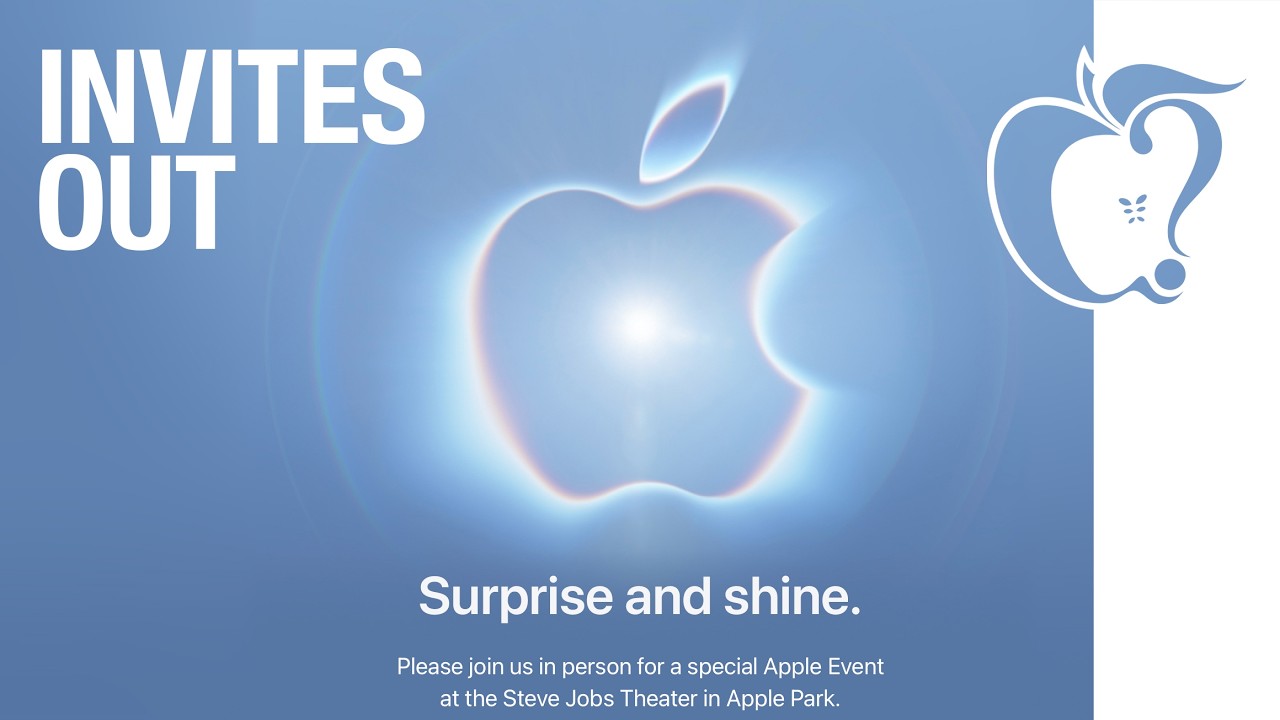
Apple has announced four things about its next event: it is on September 9, it begins at 10 a.m. Pacific, it can be watched on Apple.com or the Apple TV app, and its slogan is "Surprise and shine." The invitation does not say iPhone. It certainly does not say folding iPhone.
That small distinction has nearly disappeared from coverage of the event. Headlines now treat an "iPhone Ultra" as the main act, while the product itself, its name and its price remain unconfirmed. The expectation is credible and unusually consistent. It is still an expectation.
The date is official, the shopping list is not
Apple's own event page is exceptionally spare. Compare it with the archive immediately below: past-event entries name the products after they were introduced, but the coming event gets one sentence and no hardware list.
MacRumors' video report handles the line correctly. It says Apple has sent invitations and presents the iPhone 18 Pro, 18 Pro Max and first foldable as expected devices, then warns that none of those details becomes official until the presentation. Zollotech likewise separates the confirmed broadcast details from a forecast that includes a Fold or Ultra, new watches, AirPods and iOS 27 release timing. The sheer length of that forecast is a useful reminder that an Apple invitation is not a spec sheet.
Even the name is unsettled. Reporters and creators alternate between iPhone Fold and iPhone Ultra. MacRumors says the foldable is reportedly called Ultra internally. Apple has used neither label publicly. Any preorder page pretending otherwise is getting ahead of the manufacturer.
Why this rumor has more weight than most
The underlying picture does not come from one render account. MacRumors, citing reporting accumulated from Mark Gurman and analyst Ming-Chi Kuo, describes a short book-style phone with roughly a 5.5-inch outside display and a 7.8-inch panel inside. It is expected to be about 4.5mm thick when open, use a side-mounted Touch ID sensor instead of Face ID, and carry main and ultrawide rear cameras without a telephoto.
Brian Tong's captioned breakdown follows the same fault lines. His chapters move from positive reactions by a small number of reported early testers to the absent telephoto camera, absent Face ID, reduced crease and starting-price claims. That agreement matters, but it is not four independent confirmations. Much of the coverage traces back to the same small pool of analysts, supply-chain reports and Bloomberg sourcing.
The reported early feedback is more interesting than the numbers. Gurman's account says people who have handled the device liked its pocketability, hinge feel and iPad-like layouts on the larger screen. Those are precisely the things a folding iPhone needs to get right. Apple is late enough to avoid explaining why a phone should unfold; Samsung, Google, Honor and Motorola have already done that work.
The "Ultra" problem starts above $2,000
If the prevailing reports hold, Apple's first foldable will ask buyers to trade familiar Pro features for a new shape. Estimates place it between $2,000 and $2,500. At that level, no telephoto camera is not a minor footnote. Face ID has been the default iPhone unlock method since 2017, yet thinness may push the foldable back to Touch ID in its side button.
There is precedent for the camera compromise. Samsung's passport-shaped Galaxy Z Fold 8 also omits optical zoom. But Samsung charges $1,899, and buyers can choose the $2,099 Fold 8 Ultra if they want a 3x telephoto. Apple would be asking a customer to buy the most expensive iPhone while accepting a camera system below its Pro Max.
9to5Mac's event video calls September 9 the iPhone Ultra event, then describes the device among a slate of expectations. That confidence captures where the reporting has landed, not what Apple has promised. The useful buyer advice for the next 12 days is therefore boring: do not buy a case, arrange a trade-in or decide that the rumored missing features are tolerable yet.
Watch for five answers on stage: the real name, the camera pair, biometric method, durability rating and price. A sixth matters after the applause, when reviewers can inspect the crease and test whether iOS genuinely becomes more useful on the inner screen. Apple has confirmed when those questions may be answered. Everything else still belongs in the conditional tense.