The best Android phone of 2026 depends on which compromise annoys you
Fresh reviewer picks split between Pixel, Galaxy and OPPO. The useful buying decision is not finding a universal winner, but choosing the weakness you can tolerate.
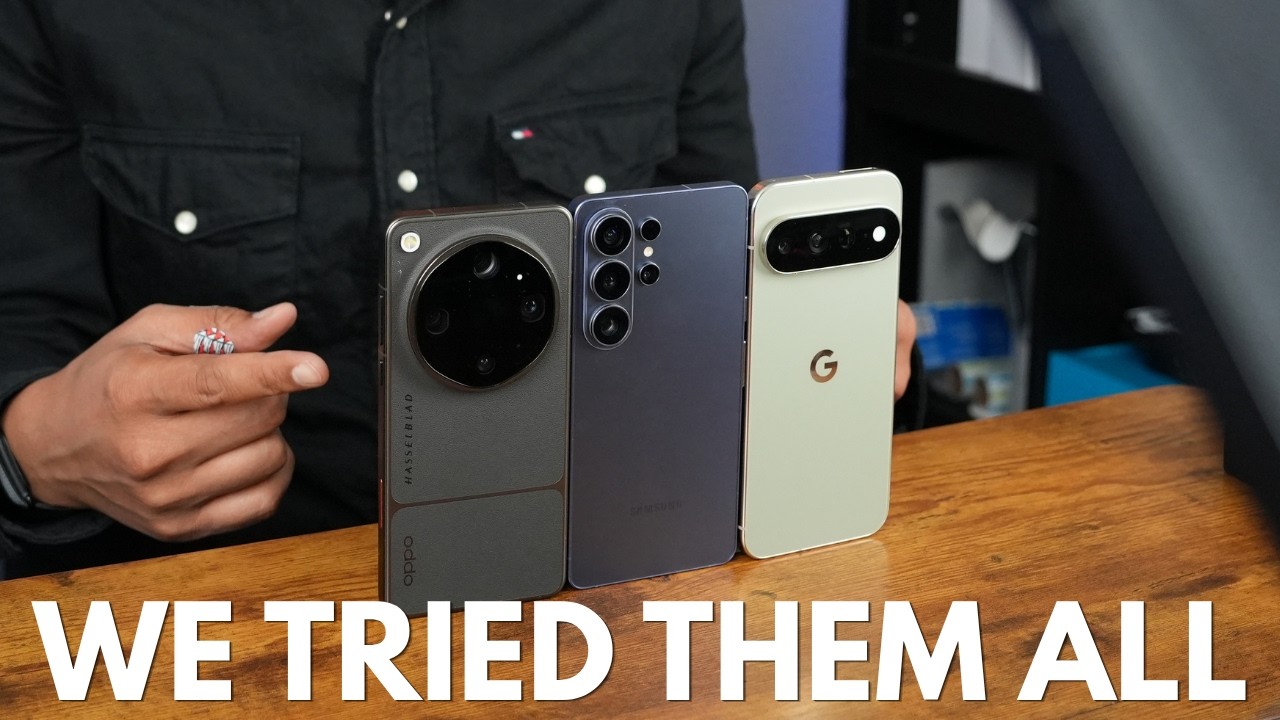
Three excellent Android phones are sitting on the counter. One has the smartest software, one is the safest all-rounder, and one carries the camera hardware the other two seem too cautious to build. There is no podium that survives a change of country, hand size or charging habit.
That is the useful message from the late-August buying guides. DHRME compared Google's Pixel 11 Pro XL, Samsung's Galaxy S26 Ultra and OPPO's Find X9 Ultra, then its two presenters chose different winners. Mark Ellis put the S26 Ultra first among conventional flagships but named the squat Galaxy Z Fold 8 his favourite phone overall. Lab tests do not break the deadlock either. These phones have specialised.
Pixel is the software choice, with hardware conditions
DHRME's case for the Pixel 11 Pro is built around tools that reduce friction. Its Rambler dictation cleans up filler words, punctuation and spoken corrections. Magic Capture records a short video and extracts still frames, which is more practical for a moving child or pet than asking either to hold still. Google also promises seven years of operating-system and security updates.
The catches start before performance charts. In the Netherlands, DHRME could not use several promoted AI features, including Magic Cue, Proactive Assistance and automatic call screening. The reviewers also encountered intermittent Wi-Fi hand-off trouble on their sample. Tom's Guide found the standard Pixel 11's Tensor G6 still behind current Galaxy and iPhone rivals, while its carried-over camera hardware did not justify the model's $100 price increase.
That makes the smaller Pixel 11 Pro the sensible Pixel, not automatically the XL. It offers the same broad software proposition without forcing a giant handset into every pocket. Buyers who do not care about Camera Looks or the highlight LED around the flash should also price last year's Pixel 10 Pro. Ellis called the 10 a bargain once the 11 arrived, and DHRME's Kevin still uses one as his daily phone. A year-old flagship is not glamorous advice, but mature software plus a discount often beats paying launch price for an incremental camera feature.
Galaxy wins by refusing to be weird
The Galaxy S26 Ultra is the consensus option when a buyer wants one device to cover work, gaming, photography and long support. Ellis ranked it first among flagships. DHRME called it the default Android choice as a compliment, pointing to the built-in S Pen, stable software, anti-reflective display and hardware privacy screen.
Samsung's official specifications support the practical side of that verdict: a 5,000mAh battery, 60W wired charging and 25W wireless charging. Tom's Guide measured 16 hours and 10 minutes in its battery test and currently ranks the S26 Ultra at the top of its camera-phone guide. Samsung's US store is also advertising up to $200 off selected S26 Ultra models through 13 September, which matters more to a buyer than arguments based only on launch price.
The S26 Ultra's weakness is not a missing essential. It is that rivals have made its conservatism visible. DHRME found the design tired, the phone wobbly on a table and the off-axis display dimmer than expected even with privacy mode disabled. Its 5,000mAh cell looks ordinary beside OPPO's 7,050mAh pack. The cameras are dependable, but Rohan preferred OPPO once image quality became the deciding factor.
OPPO buys better photos with inconvenience
The Find X9 Ultra is the specialist choice. OPPO confirms a 7,050mAh silicon-carbon battery, 100W proprietary wired charging, 55W PPS support and 50W wireless charging. Its camera system includes large high-resolution sensors and a genuine 10x optical telephoto, hardware that helped it beat the Galaxy S26 Ultra in TechRadar's 500-photo comparison.
Rohan chose it because photographs of his children mattered more than the safer all-round package. The same review supplied the warning label. Their unit became warm during 4K60 recording and Android Auto navigation, restarted once during navigation, and delivered a bit less than the comfortable two-day endurance its capacity suggested. In Europe the charger is not in the box, so their USB PD/PPS charging reached about 42W rather than the advertised 100W. Availability and support are also less universal than Samsung's: DHRME cited five years of operating-system updates and six years of security support, and the phone is not officially sold in the United States.
Those limitations turn a camera champion into a regional recommendation. Importing one can mean checking cellular bands, warranty service, eSIM support and charger compatibility yourself. A phone that wins a blind photo comparison can still be the wrong purchase when the nearest authorised repair counter is in another country.
Use the irritation test
Choose Pixel if clean Android, voice tools, a smaller Pro body and long support matter more than peak gaming performance. Choose Galaxy if you want the fewest awkward explanations, broad availability, strong battery testing and a stylus. Choose OPPO if the camera is the reason you carry a phone and local sales and service remove the import risk.
Then check last year's model and today's promotion before paying. DHRME's two presenters did not agree on a winner; Ellis preferred a foldable over every slab. That disagreement is more useful than a universal crown. At this end of the market, every option is fast and capable. The purchase turns on which compromise will still irritate you six months after the unboxing.