Xiaomi 18 Pro Max: China price first, global launch promised later
At 6,999 yuan the Xiaomi 18 Pro Max pairs an 8,500mAh battery with two 200MP cameras. Hands-on reports praise the zoom and privacy screen. Xiaomi says the Pro series is going global this year.
Prepared by theMarket Desk·how our desks work
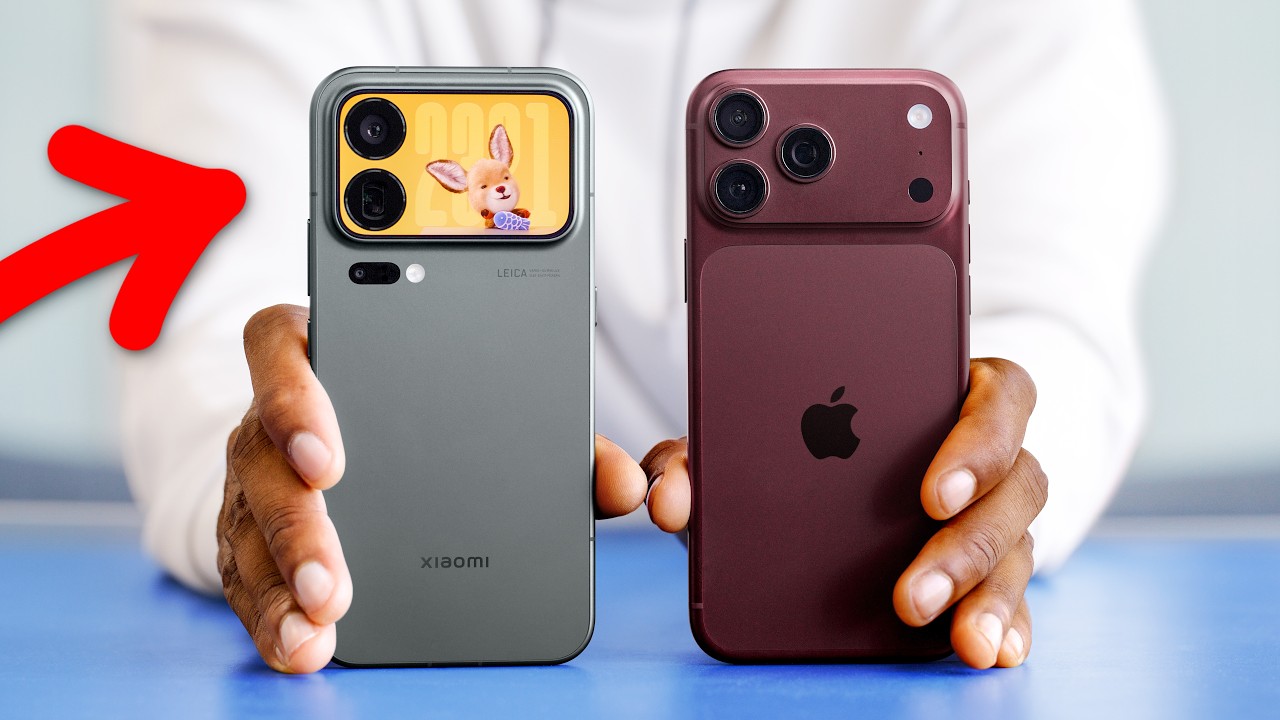
The business question behind the Xiaomi 18 Pro Max is simple: can a China-first spec sheet pull iPhone buyers once Xiaomi actually sells the phone outside China? Xiaomi launched the Pro Max in China on September 23 at 6,999 yuan for 12GB and 256GB, about $1,045 on GSMArena's conversion, with an 8,500mAh battery, two 200-megapixel cameras, and Qualcomm's Snapdragon 8 Elite Extreme Gen 6. Less than a day later, chief marketing officer Xu Fei posted that the Xiaomi 18 Pro series "is going global this year—with more surprises."
That sequence is the strategy as it looks from outside: ship the hardware, publish big numbers on battery, zoom and brightness, then promise the rest of the world a date that has not been named. The incentive, in this reading, is share among people who already compare flagships on a spreadsheet. What reviewers dispute is whether those numbers survive daily use, and whether "global this year" means the same phone India and Europe will be offered.
The China price is the argument
GSMArena's launch report lists the Pro Max from 6,999 yuan to 9,999 yuan for the 16GB/1TB configuration, or 10,999 yuan for a transparent red special edition. The smaller 18 Pro starts at 5,999 yuan with the non-Extreme Snapdragon 8 Elite Gen 6 and a 7,000mAh cell. Those dollar figures are GSMArena's conversions, not shelf prices, and Xiaomi has named no price for any other market. A yuan price that converts to roughly $1,045 is a talking point against Apple only if the global price lands anywhere near it.
The catch is availability. Xu Fei's line names the "18 Pro series," which GSMArena read as both phones. The same report noted that Xiaomi India's account mentioned only the 18 Pro. That may be a regional cut, a social-media slip, or an early sign that the Max stays a China halo. None of those three readings is confirmed. A buyer outside China is shopping a promise, not a shelf price.
The spec dump that follows Apple's calendar
It took only a couple of hours after Qualcomm's new Snapdragon 8 Elite Gen 6 chips for the first phones to go official in China. GSMArena called the 18 Pro the first Elite Gen 6 phone and the Pro Max the first to claim the Extreme variant. The hardware list leans on big numbers. Both the main camera, on a 1/1.28-inch sensor, and the 3.2x periscope telephoto, on a 1/1.56-inch sensor, are 200 megapixels. The Pro Max's 8,500mAh cell is 13 percent larger than its predecessor's, by GSMArena's count, with 100W wired, 50W wireless and 27W reverse wireless charging, plus IP69.
Marques Brownlee's hands-on video, paraphrased from the retrieved transcript, treats the phone as a rival to Apple's update: last year's Xiaomi 17 Pro Max was designed to one-up the iPhone 17 Pro Max, he said, and this year's phone is trying to one-up the iPhone's update. He noted that the Xiaomi has no variable aperture and relies on bigger sensors instead. He recorded a five-minute charge from 12 to 25 percent with the phone holding around 80 watts, kept a SIM tray, and said the Pro Max was not heavier than the iPhone it is aimed at. Those are his session notes, not a lab rundown of days between charges. He also said he cannot use this Chinese phone as his daily driver, even after getting Google Play onto it.
9to5Google's Ben Schoon framed the new privacy panel as Xiaomi taking Samsung's Galaxy S26 Ultra trick and putting it on both the compact Pro and the Max, with onlooker detection from the front camera and location-based triggers. GSMArena went further, writing that Xiaomi's version "is more capable than the one on Samsung's Galaxy S26 Ultra" because it can cover notifications, floating windows, and split view, and can be tied to the AI key. Brownlee described slightly worse viewing angles and a rainbowy sheen off-axis with privacy mode on, offset by a panel that reaches 4,000 nits, and called the feature worth that trade-off. He also asked why the control sits in privacy settings rather than display settings, and complained that Xiaomi restricts the new side button even more than Apple restricts its Action button. Those are taste. The policy is that Xiaomi shipped the hardware toggle; Samsung's Ultra still owns the earlier public version of the idea.
What a global buyer still cannot know
Camera quality is the other disputed asset. Brownlee found the new 200-megapixel telephoto the change that made him want to shoot zoomed frames; he treated the ultrawide as an afterthought. GSMArena's launch write-up lists the sensors and has not published a scored camera test. Until global review units exist, the photography case for switching from an iPhone 18 Pro Max is a hands-on impression plus a spec sheet.
The rear display is the feature that sets the phone apart, and the one Xiaomi has to keep justifying. GSMArena says it is a viewfinder for the rear cameras, a widget board, and a surface for Xiao AI mini apps. Brownlee called it the star feature of the phone. A buyer outside China will have to decide whether a second screen is a selling point or a reason to skip the Max, especially if India only gets the smaller Pro.
Xiaomi gains an early China launch and a global promise to market against Apple's autumn lineup. Apple keeps the installed base and the software argument Brownlee himself raised: numbers are not the same as a finished daily experience. A global shopper should wait for the actual regional battery rating, the actual camera processing, and a price in local currency. Xu Fei promised more surprises this year. The detail that matters is which of these phones arrives, and at what price.
Image: Marques Brownlee's source-video thumbnail, used to identify the hands-on report discussed above. Creator commentary is paraphrased from the retrieved transcript. MobileTech has not independently tested the Xiaomi 18 Pro Max.