Pixel Watch 5 can make an emergency call, with one awkward catch
Google’s most ambitious health features make the Pixel Watch 5 compelling, but launch reviews could only test the sensors, not the promises that matter most.
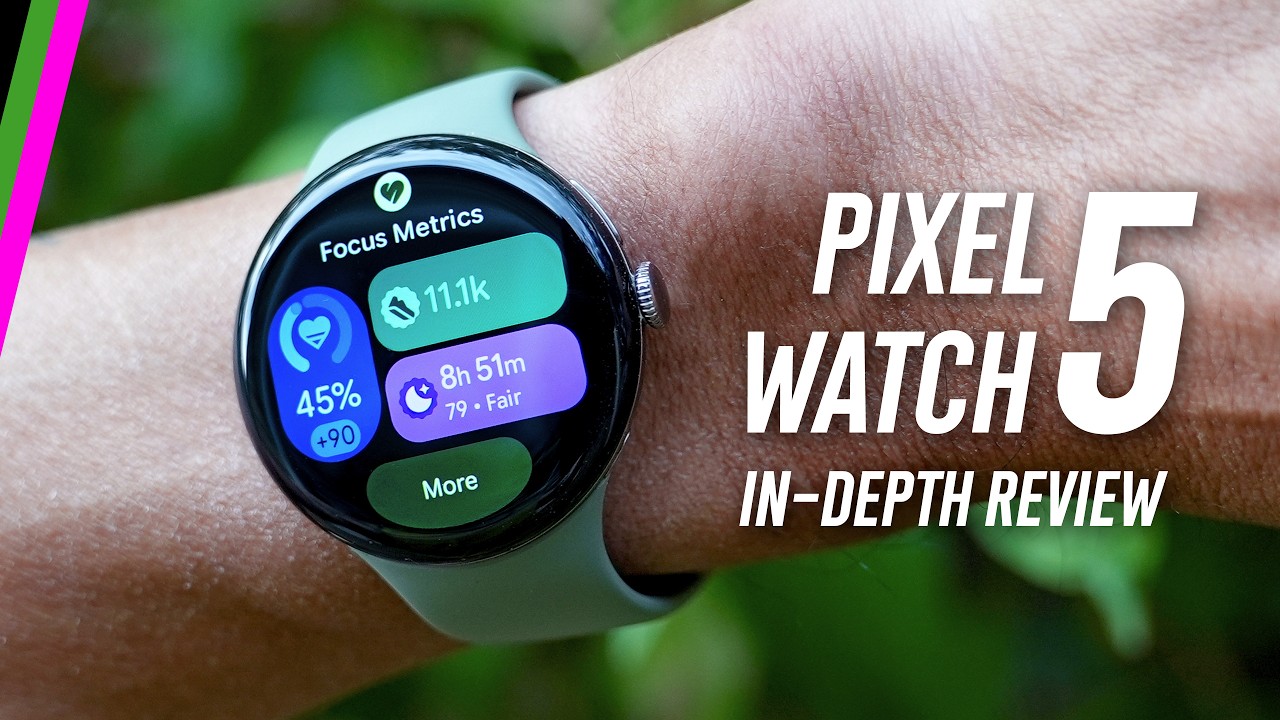
A smartwatch can count a bad night’s sleep. Google now wants one to recognise the moment breathing has become a medical emergency, check whether its wearer responds and call for help. That is a much bigger job, and it makes the Pixel Watch 5 a more ambitious health watch than a typical yearly refresh.
It also creates an unusual review problem. The watch’s heart-rate tracking, GPS and battery can be tested today. Its most important new health claims either need a month of wear, were not switched on for reviewers, or are limited to particular countries. The sales pitch has arrived before the full body of independent evidence.
The emergency call, and the asterisk
Google’s Breathing Emergency Detection uses the optical heart sensor, accelerometer and barometer with on-device AI to look for a severe, sustained fall in oxygen saturation. If the wearer appears unresponsive, the watch can contact emergency services and share a location. Europe gets it first.
That description needs its fine print attached. Google says the feature has not been cleared or evaluated by the US FDA. It may miss emergencies, is not intended for pregnancy or for people with certain respiratory and cardiac conditions, and stops monitoring for this purpose after the wearer has been asleep for 30 minutes. A charged phone or cellular watch and adequate connectivity are also part of the rescue chain.
The other Health Guardian additions are slower-moving trend reports. Blood pressure, sleep breathing quality and insulin resistance summaries require about a month of data. Google explicitly describes them as wellness information, not diagnostic tools or substitutes for clinical measurements. They do not produce real-time blood-pressure or glucose readings.
Reviewers could test the foundation, not the headline
Chase the Summit’s launch review identified the central snag: the Health Guardian functions were not available for testing. That makes any verdict on blood-pressure or insulin-resistance trends premature. The channel also noted that the case, display and heart-rate sensor are unchanged from the Pixel Watch 4, while the meaningful hardware move is the Snapdragon W5 Gen 2 platform and 50 percent more RAM.
The measurable parts performed well. DesFit found heart-rate recording reliable across cycling, running and strength work, and came back with unusually clean GPS tracks after activities uploaded. His 45mm test watch, with brightness turned down, warned of low battery after 44 hours despite roughly six hours of outdoor activity, beating Google’s 40-hour claim in that particular run. He also stressed that the claimed 15% improvement in sleep staging comes from a new algorithm shared across compatible Fitbit and Pixel devices, not a Pixel Watch 5-only sensor breakthrough.
The Quantified Scientist reached a similarly mixed but useful result. Exercise heart-rate and corrected route recording were strong in his testing, yet the smaller 41mm watch died before a roughly ten-hour hike ended. The 45mm model finished with about 7 percent left. That size choice is therefore more than cosmetic for hikers, marathoners and anyone who expects continuous GPS to coexist with overnight monitoring.
The nicer maps arrive after you save the run
Google says route maps are twice as accurate as the previous generation in difficult environments. The trick is partly post-processing: Google Maps technology models satellite paths around three-dimensional buildings, while weather-station data helps correct atmospheric interference. The company’s internal comparison put the Pixel Watch 5 ahead of the Apple Watch Ultra 3 and Garmin Fenix 8 Pro, although that study used pre-production watches, good network conditions and sessions of three hours or less.
Independent testing supports the cleaner tracks without validating that ranking. Chase the Summit called the improved routes class-leading in his follow-up runs. DesFit found canyon and tree-cover traces tight and consistent, then added the useful caveat: live pace, speed and total distance are a different question, and those already lined up; the prettier line is drawn later on Google’s servers. A health watch is still less persuasive if the saved route wanders through a building, but the on-wrist numbers were never the weak point.
The 45mm is the buy, if you need a new watch
For a new Android-watch buyer, the 45mm Pixel Watch 5 is the safer choice if comfort permits. It starts at $429 in the US, versus $399 for the 41mm model, and its extra endurance provides useful margin for sleep tracking and emergency features. Both sizes keep last year’s heart-rate hardware and pick up the faster processor.
Pixel Watch 4 owners should wait. Google is bringing Breathing Emergency Detection and the monthly trend features to that generation where supported, and the new sleep algorithm benefits other compatible watches too. Paying for the Watch 5 mainly buys better route processing, more speed and the latest package, not exclusive access to the health ideas printed largest on the box.
Until a reviewer can leave Health Guardian switched on for a month, in a country where the emergency feature actually runs, the tested case is simpler. The Watch 5 is a capable Android watch with better maps. Health Guardian is still a region-dependent software layer, not a reason the upgrade has already been proven.