Pixel 11 reviews split on camera gains and the price rise
Google says the Pixel 11 adds a larger main camera and 30x Super Zoom on a 5x lens the Pixel 10 already had. Reviews share the seven-year update promise and split on the pictures, Tensor G6 heat and whether the higher price is earned.
Prepared by theSoftware Desk·how our desks work
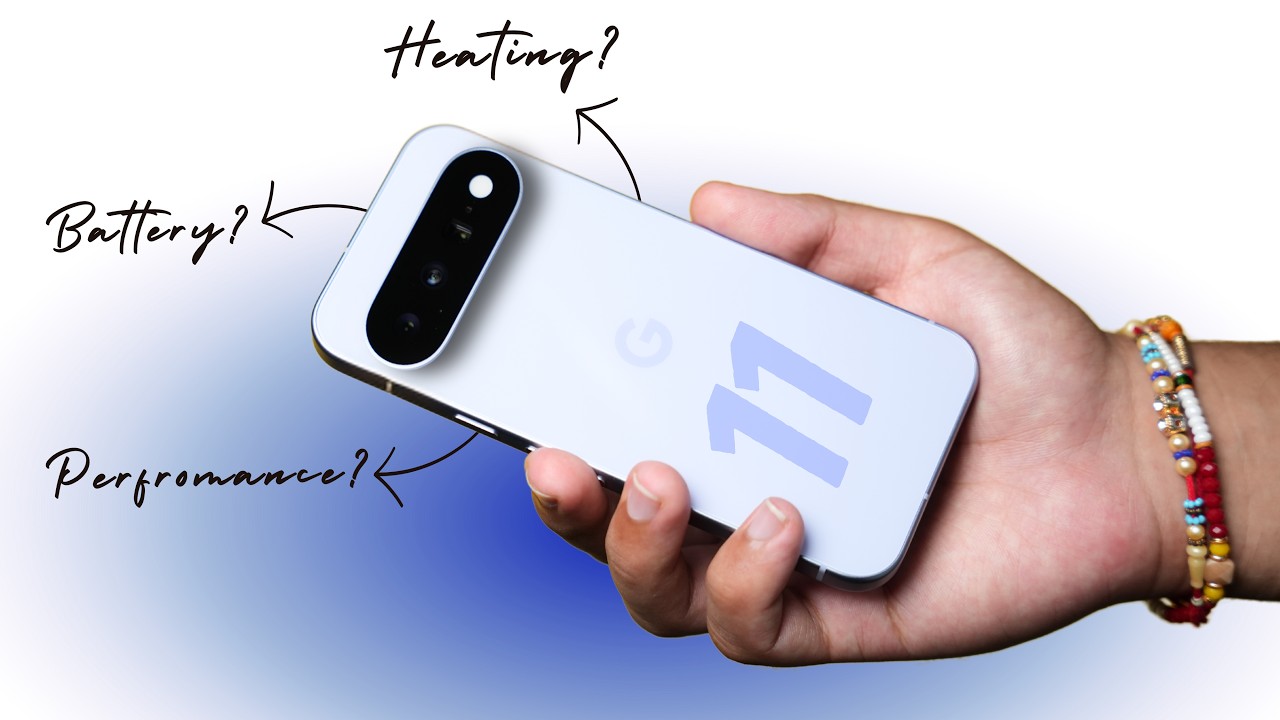
The Pixel 11 camera story depends on which sentence you read first. Google's 12 August launch post says the base phone has a new, larger 48-megapixel main sensor, claimed to gather 56% more light, and that the 5x telephoto on Tensor G6 now reaches 30x Super Zoom. The 5x lens is not new. The Pixel 10 already had one. The reviews are arguing about whether a larger sensor and a longer digital zoom show up in the pictures, and whether the higher price is worth it.
The size is the familiar one. Android Authority, Tom's Guide and the Guardian all measure the display at 6.3 inches. In the US those reviews put the phone at $899, $100 above the Pixel 10. Samuel Gibbs, in the Guardian, has the British price at £879, £80 more than last year.
Same 5x lens, three accounts of what changed
Brady Snyder at Android Authority is the most specific about the hardware. Google, he writes, swapped the Pixel 10's main camera for a larger 1/1.56-inch, 48MP sensor. The 13MP ultrawide and the 10.8MP telephoto are carried over, and 30x Super Zoom is new, and digital. "The Pixel 11’s camera is convincing at up to 10x, and beyond that, you’ll notice a dropoff in sharpness." He is "pleased to report that the Pixel 11’s computational photography is nearly perfect."
Gibbs treats that 5x camera as the one that sets the phone apart, and he is kinder once the zoom leaves the optics. "In bright light it can digitally zoom to 30x magnification with surprisingly good results." John Velasco at Tom's Guide disagrees that the camera moved. Side-by-side shots against a Pixel 10 looked nearly identical to him: "With processor performance, battery life, and core camera hardware remaining largely static, the added cost simply doesn’t deliver a matching leap in value." Derrek Lee at Android Central, after a few weeks, describes roughly the same sensors, a warmer rendering than the Pixel 10, and less detail than the Pro at every zoom.
The shared fact is the 5x camera. A shared verdict on the pictures is not there.
Seven years is settled. The new assistance is not.
Google's update list places the Pixel 11 with the phones that receive seven years of OS and security updates, and says Pixel Drops may arrive in that window. The launch post drops the hedge: seven years of OS, security and Pixel Drop updates.
Snyder calls Android 17 on this phone the best version of it. Proactive Assistance did not earn a job in his review. "Proactive Assistance was there, but never in a way that saved me time." Now Playing, Call Screen and Hold for Me did more for him. Rambler, the new dictation in Gboard, was the fresh tool he wanted to keep. Gibbs found the same assistance useful inside Google Messages, under the UK name Magic Cue and the US name Gemini Proactive Assistance, and absent from WhatsApp and Signal. Lee's Daily Brief and in-message calendar prompts read as help rather than a demo.
Battery life holds. The year-over-year test barely moved.
Snyder writes that the Pixel 11 "is excellent on battery life" and that he "regularly enjoyed more than five hours of screen-on time while using about 75% of my battery," including long travel days. Lee: "battery life hasn’t been a problem for me, and I generally get a full day of use before needing to plug in." Gibbs describes a lighter pattern, about 54 hours between charges with more than seven hours on the screen, and says even a heavy day should be survivable.
Velasco's objection is the comparison with last year. Tom's Guide's drain test timed the Pixel 11 at 12 hours 45 minutes, 28 minutes behind the Pixel 10's 13 hours 13 minutes, still ahead of the Galaxy S26 at 11 hours 28 minutes, with the iPhone 17 at 12 hours 47 minutes in the same table. He also measured 52% charge in 30 minutes, the same figure he recorded for the Pixel 10.
Tensor G6 is the actual disagreement
"Looking at the Pixel 11 against competitors like the Galaxy S26 and the iPhone 17, the Tensor G6 is laughably behind." Snyder is describing a phone he used, not only a chart. The base model ships without a vapor chamber. He hit lag and heat in ordinary use, and photos at the Phoenix Zoo were enough for the camera app to turn off zoom and Creator Suite because the phone said the "device is too warm." Fortnite at low settings was worse: "even at low settings, it was unplayable on the Pixel 11 — I had frame rate lows of 9 FPS, which isn’t sustainable for a competitive shooter where every frame counts."
Gibbs writes that Tensor G6 is up to 20% faster in tests. "It significantly lags top-end rivals from Qualcomm and Apple, so won’t win any raw performance awards, but feels snappy in daily tasks and can handle mid-level gaming just fine." Velasco's Geekbench 6 averages were 2,664 single-core and 7,347 multi-core, against 3,531 and 10,778 for the Galaxy S26 and 3,701 and 9,460 for the iPhone 17. He still found the interface fluid and mainstream games playable. Lee: "Day-to-day use is fine, although don’t expect the Pixel 11 to be a gaming powerhouse." It warms up in games, which he ties to the missing vapor chamber.
From a Pixel 9, or anything older, the zoom, the screen and the years of updates are a real step. From a Pixel 10, Snyder and Velasco both say you can skip it. Gibbs still calls this "the best phone you can get under £900," and lists "not a big upgrade on previous model" among the cons. The support window is the part these reviews are not arguing about.
Image: thumbnail from Perfect Gadget's 15-day Pixel 11 review. The written tests above are the basis of this piece. MobileTech has not tested the phone.