Samsung built the Galaxy Watch 9 around your sleep, then fitted a 390mAh battery
Vitals, Heart Health and morning blood-pressure estimates all wait for you to wear the Watch 9 to bed. Across three video testers and four written reviews, the recurring problem is what is left in the battery when you wake up.
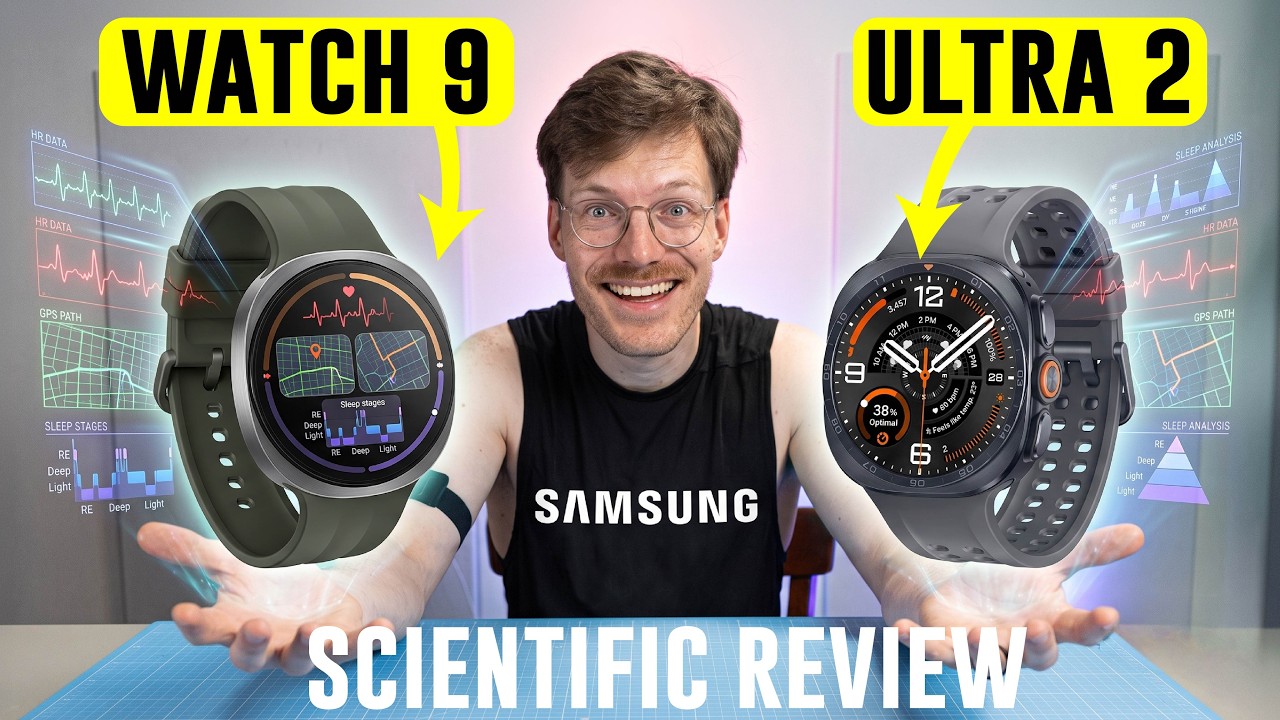
Samsung's pitch for the Galaxy Watch 9 is not a chip or a screen. It is your bedtime. Vitals, the Heart Health Score and a morning blood-pressure estimate all sit there waiting for you to sleep in the thing, which is why the reviewer at Tech It Easy dropped the marketing language: a lot of the new metrics “need your sleep data to really work,” and if you will not wear it to bed, “it’s almost not worth getting it.”
So what happens the morning after? Rob ter Horst, who runs The Quantified Scientist and buys his own review units, charged a Watch 9 past 50 percent, slept in it, and went straight out for a run. It died halfway through. “I thought that a 50% charge before bed was enough to do a sleep and a run, but unfortunately it was not.” The watch starts at $379.99.
What the sleep data actually unlocks
Samsung’s US product page is specific about the terms. Vitals compares five overnight signals — heart rate, heart-rate variability, respiratory rate, skin temperature and blood oxygen — against a personal baseline, and it wants at least seven nights of sleep data before that baseline exists. Sleep apnea risk detection, which Samsung describes as FDA-cleared, needs two nights inside a ten-day window. Blood Pressure Trends estimates morning blood pressure from overnight wear, once you calibrate against a cuff sold separately and recalibrate every 28 days. The Heart Health Score sits on top of four daily factors: sleep duration, blood pressure trend, BMI and vigorous activity.
That last dependency has teeth. Derrek Lee at Android Central could not use Heart Health at all: it required blood-pressure tracking and he had no cuff. Trusted Reviews found a harder wall: ECG, blood pressure and sleep apnoea remain Galaxy-phone features. Pair a Watch 9 with any other Android handset and that slice of the health suite is simply absent.
When it stays awake, the sensors are fine
On a full battery, testers liked what they measured. Nina Raemont at ZDNET compared a Stairmaster session against a Polar H10 chest strap and got average heart rate within 3 beats per minute and max within 1. Ter Horst, on the larger GPS variant, recorded a 0.99 correlation with the same Polar strap on indoor cycling and 0.96 outdoors. He set his running result aside after the mid-run death, in case a dying cell had degraded the optical readings.
Mike O’Brien spent a month in the watch. Against a Muse EEG headband one night, deep sleep came in at 109 minutes versus the headband’s 107, REM at 97 versus 98. He called that a strong sign for a wrist tracker, while noting Muse itself is only about 86 percent accurate. Ter Horst’s two-night Zmax EEG comparison was less flattering: 86 percent agreement on deep sleep, 69 percent on REM, 48 percent on light sleep, with extra deep and REM spilling into the night. He files Galaxy watches in his second tier, behind the Oura Ring 4, Whoop, Pixel and Fitbit hardware, the Apple Watch and the Eight Sleep Pod — on his body, he stresses, not necessarily yours.
The software then stacks scores on those numbers: Fitness Index, Daily Cardio Load, Energy Score, antioxidant index, hearing health. Lee called the Samsung Health app overwhelming, with little way to make the scores useful. Raemont, several days in, was still wondering how “this groundswell of graded health data will result in my own behavior changes.” Trusted Reviews hit a practical insult: many of those tools stay switched off until you hunt them down in the app, and once enabled, most “do not reach back and tap into data already collected.” O’Brien likes the app’s home tab. He does not like the ad Samsung puts at the very top of it, nudging him toward a more expensive watch.
390 milliamps against a night plus a run
Samsung rates the 40mm Watch 9 at 390mAh, up from 325mAh in the 40mm Watch 8, with the 44mm cell at 445mAh against last year’s 435mAh. ZDNET puts Samsung’s own figure at around 30 hours with the always-on display enabled; Tech It Easy cites an official range of 30 to 40 hours.
Results split by size and settings. Raemont’s 40mm ran about 36 hours 30 minutes, from 98 percent at 9:33 a.m. to 2 percent the following evening. Tech It Easy’s first charge, always-on display on and nothing disabled, lasted 37 hours 15 minutes including a GPS 5K — the top end of Samsung’s claim, and he was happy with it. O’Brien, always-on off, got “almost two days, like not really two days.” Lee, on the 44mm with always-on off, often had to charge before bed and put “battery life is atrocious” in his cons list. Sam Hopes at Tom’s Guide, a month in, saw roughly 24 hours — and would not wear it to bed anyway, preferring an Oura Ring 5 for sleep. Trusted Reviews, on the 40mm, called the cell piddly and comfortable use one full day.
Charging widens the gap rather than closing it. Lee waited well over an hour from empty to full; Raemont timed about an hour and 20 minutes, against 45 minutes for a Pixel Watch 4, which O’Brien had also just come off and agreed was quicker. Tech It Easy rarely saw the charger exceed 5 watts against Samsung’s 10-watt claim, and his first full charge took just over two hours versus an official 90 minutes.
O’Brien’s buying rule is the practical one: if the gap between the Watch 8 and the Watch 9 is under $50, take the Watch 9; if the older watch saves more than that, take the older watch. Either way you are budgeting a daily trip to the charger around the nights you are meant to be wearing it — the trade the 800mAh Galaxy Watch Ultra 2 exists to avoid, at rather more than $379.99.