Bose's $359 QuietComfort 2nd Gen is squeezed by its own flagship
The QuietComfort Headphones 2nd Gen improve comfort and soften Bose's aggressive noise cancelling, but current discounts put the Ultra 2nd Gen within about $10.
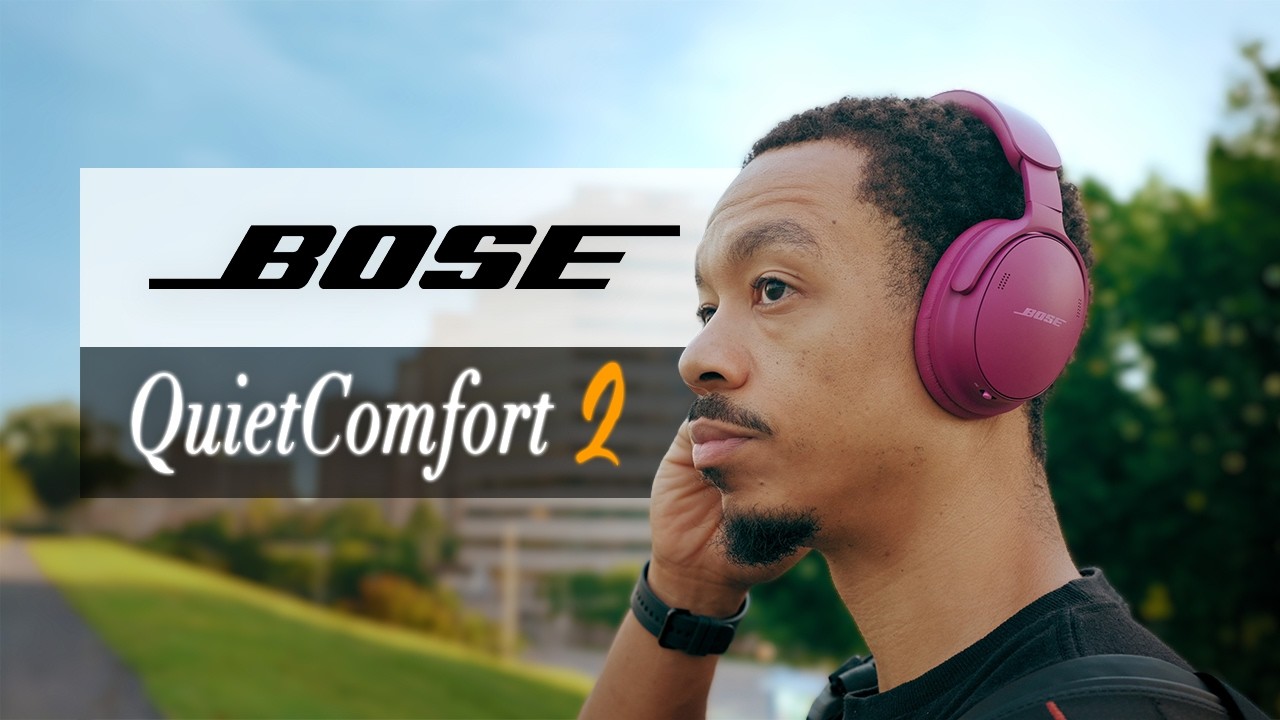
Bose has a pricing problem of its own making. The QuietComfort Headphones 2nd Gen went up for pre-order on 8 August at $359 and started shipping on 13 August, positioned as the sensible step below the QuietComfort Ultra 2nd Gen. Nearly three weeks of reviews later, the step-down model has made an awkward case against the flagship above it, which has drifted down toward the same money.
The cheaper pair got the comfort crown
Two reviewers who compared the fit praised the redesigned headband. RecordingNOW, which buys its review units rather than accepting loaners, weighed the new model at 237.3g against 236.1g for the 2023 original — a difference the channel dismissed as unfeelable — but described the redesigned plush headband as removing the top-of-head pressure that the firmer first-generation band produced. That reviewer scored the 2nd Gen a perfect 10 for comfort, calling it the most comfortable of more than 60 pairs the channel has tested.
Tech Spurt, testing over a fortnight in the UK where the headphones run just under £300, got there from a different direction: 230g on the scales, ear cups wide enough to enclose the ear without pressing on it, no fatigue across hours of wear. His complaint was cosmetic — the cups do not rotate a full 180 degrees, so hanging them round your neck means taking them off and turning them around first.
What Bose actually changed
SoundGuys, reading the launch materials on announcement day, flagged the two changes that mattered most to them: microphones tuned to compensate for gaps in the ear cup seal — the ones caused by spectacle arms — and a smoother ActiveSense response so sudden noise spikes in transparency mode stop feeling abrupt. The reviewer was openly delighted that USB-C audio arrived, noting the implementation is two-way, so the headphone microphones work over the cable for video calls, not just playback.
The rest is unglamorous and mostly welcome. Bluetooth moves from 5.1 to 5.4. Spatial audio and a cinema mode come down from the Ultra line. The power slider migrates from the outside of the ear cup to the underside. USB-C carries lossless audio up to 24-bit/48kHz, and Bose bundles both a USB-C-to-USB-C and a USB-C-to-3.5mm cable, colour-matched to the headphones, because the analogue jack is gone.
Two things did not change, and both count against a $359 pair. Battery life is still rated at 24 hours with noise cancelling on, identical to the 2023 model. RecordingNOW called that below average now that 30 hours has become the class norm — the Ultra 2nd Gen itself made that jump. Tech Spurt's own measurement was harsher still: roughly 16 hours of real playback with cancellation maxed and immersive audio running, and about three hours to recharge from empty. And there is no LDAC or aptX wireless support at all, which reviewers found odd at this price.
The build went backwards
RecordingNOW's comparison turned up one clear regression: the first-generation headband contained metal sliders, and the 2nd Gen is essentially all plastic apart from the protein leather on the cushions. The channel rated the older design more solid and durable, and it is the only category where the 2023 model beat its successor outright. Tech Spurt independently described the finish as plasticky for a premium product, though he found no wear after two weeks of shoving them into bags and pockets.
Better than the flagship, in the ways that count
CEONTHEMAKING, who bought a second pair in burgundy after Bose sent a white review sample, put the 2nd Gen head-to-head with the Ultra 2nd Gen and found the gap thinner than the badges suggest. The Ultra sound more open with a wider stage; the QuietComfort sound more direct, with punchier bass once you engage the EQ preset. Noise cancelling is close enough that he would not call it a meaningful difference, and the Ultra's clear wins came down to a cleaner transparency mode, wear detection that wakes the headphones automatically, a 2.5mm jack alongside USB-C, and 30 hours instead of 24.
The Verge's John Higgins went further, arguing the weaker cancellation is a feature. "I experience a phenomenon dubbed 'eardrum suck' on the QC Ultra Headphones 2nd Gen because of their aggressive noise cancellation," he wrote, adding that he did not feel it on the QuietComfort. He also found the default tuning "the best I've heard from Bose," fixable to his taste with a single +4 boost to the midrange in the app's three-band EQ. His verdict on the range politics was blunt: the 2nd Gen are "a strong argument against spending the extra money on the Ultra Gen 2."
His score was still a 7. Call quality remains the weak point — sibilance on his voice, and compression in loud environments that clips whole sentences. And the $359 asking price, he wrote, "puts them in a no-man's-land," squeezed between current flagships that turn up around $400 and last-generation competition like the Sony WH-1000XM5 and Sennheiser Momentum 4 that regularly sell for $250 or less.
What to do about it
That squeeze is the practical takeaway. The Ultra 2nd Gen lists at $449, but RecordingNOW noted it selling for $369.99 while recording — roughly ten dollars above the brand-new step-down model, which has no discount history at all. Meanwhile the 2023 QuietComfort, which shared the same $359 list price, has fallen to $229 and has hit $199 on past sale events.
If you want the new one, the case for waiting is strong: nothing about a three-week-old model at full list price rewards urgency, and a launch price sitting within ten dollars of the flagship above it is not a stable arrangement. If you want Bose noise cancelling and comfort for as little as possible, the outgoing model still delivers most of both for a hundred and thirty dollars less. If 30-hour battery, high-resolution wireless audio or dependable outdoor calls matter most, compare those features separately before choosing on comfort and cancellation alone.